Critical Performance Failures in Real-World Applications
Choosing an inadequate finish often leads to several common architectural frustrations:
Noticeable Shading Variance: Significant color inconsistencies across different frames from the same batch, compromising the project’s visual integrity.
Poor Coating Adhesion: Surfaces that are prone to chipping or peeling—revealing the base primer—at the slightest impact during construction or furniture moving.
Oxidation and Surface Blackening: Within months in high-humidity or coastal regions, subpar finishes may develop unsightly rust spots or permanent fingerprint staining.
Ultimately, these frustrations demonstrate that standard untreated aluminum is insufficient for high-performance architectural use.
The Structural Limitations of Bare Aluminum
Accelerated Oxidation: Untreated aluminum develops a powdery, white oxide layer over time, leading to irreversible aesthetic degradation.
Insufficient Hardness: Raw aluminum is relatively soft; standard daily impacts result in deep, irreversible surface scarring.
Contamination Sensitivity: The porous nature of bare aluminum attracts grease and fingerprints, which become permanently etched into the surface.
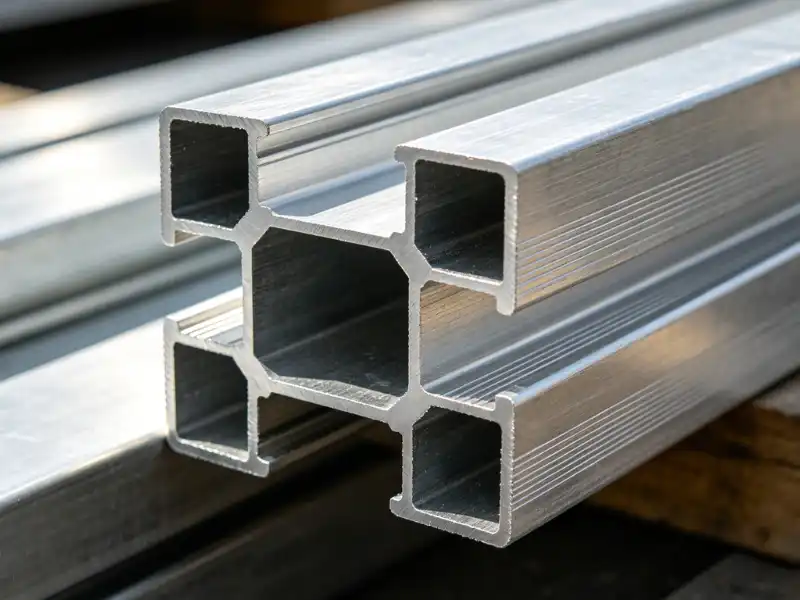
Aesthetic Monotony: Limited to a rigid silver-gray hue, bare aluminum fails to support modern custom architectural styles.Original bare aluminum profile with natural mill finish, no anodizing or powder coating. Basic raw material for aluminum windows and doors, easy to oxidize without surface protection.
Common Architectural Surface Treatment Methods
Anodizing (Authentic Metallic Finish)
Rather than applying an external coat, anodizing creates an electrochemical reaction that naturally forms a dense oxide layer integrated into the aluminum substrate. This eliminates the risk of delamination.
Visual Style: An understated, cool metallic texture. Mainstream options include Silver-white, Champagne, Antique Bronze, and Titanium Gold.
Why Choose Anodizing?
Exceptional Hardness: Microhardness levels are second only to diamond, providing high resistance to mechanical scratching.
Fade-Resistant Longevity: The color is embedded within the oxide pores. In various Middle Eastern projects, these finishes have remained stable after 30+ years of solar exposure.
Recommended Anodic Film Thickness:
11–18 μm (Standard): Ideal for inland continental climates with a service life of 10–12 years.
19–25 μm (Coastal Minimum): Mandatory for coastal regions (e.g., UK, Japan, Australia) for 25+ years of performance.
25–50 μm (Industrial Grade): Specialized for extreme maritime or tropical environments.
Substances to Avoid: Anodized finishes are sensitive to alkaline substances. Contact with wet mortar or cement can cause permanent white spotting if not removed immediately.
Powder Coating (A Myriad of Color Possibilities)
Powder coating involves the electrostatic application of dry resin, which is then cured into a solid film. It provides a “protective layer” for the aluminum.
Versatile Palette: Full RAL chart compatibility, from pure whites to deep matte blacks, including Morandi and Pantone shades.
Cost-Efficiency: Lower production overhead compared to anodizing lines, offering direct savings for large-scale residential projects.
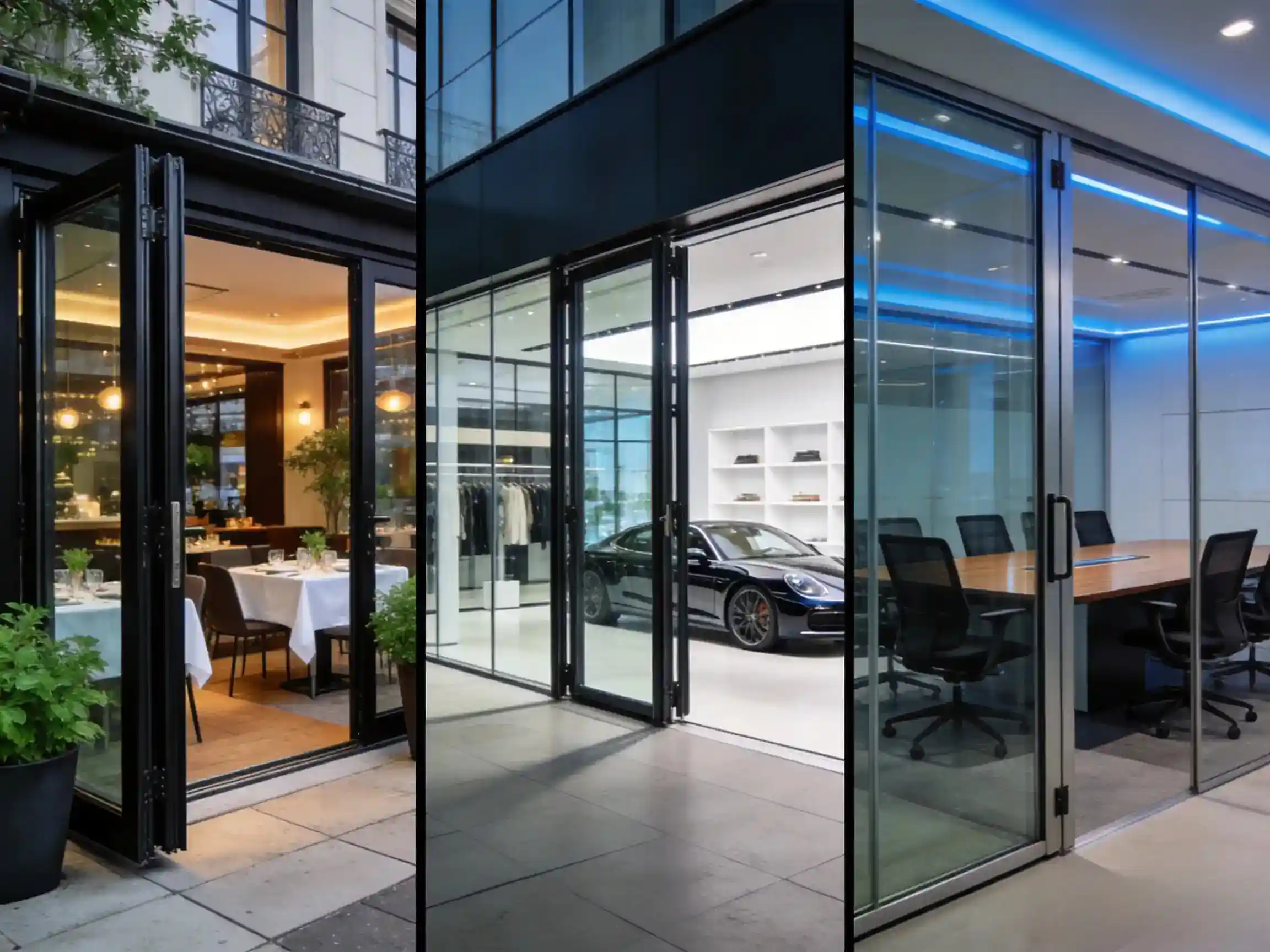
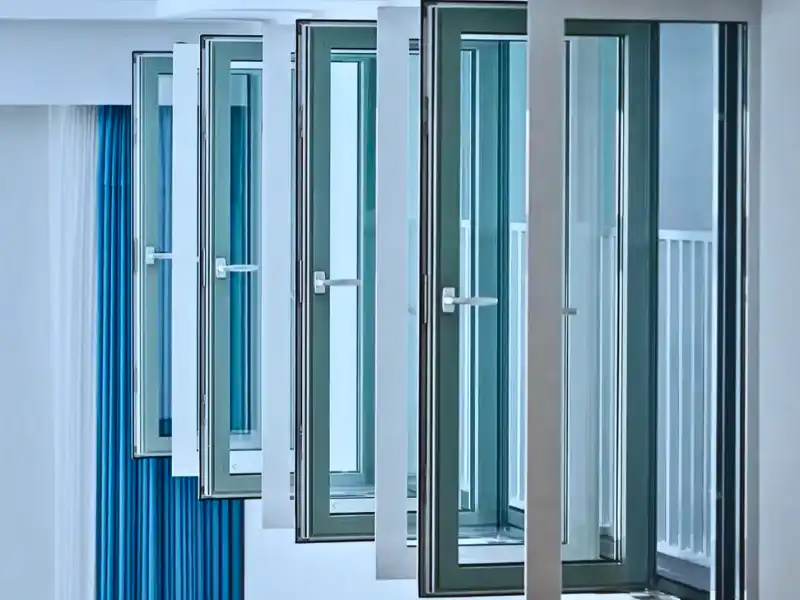
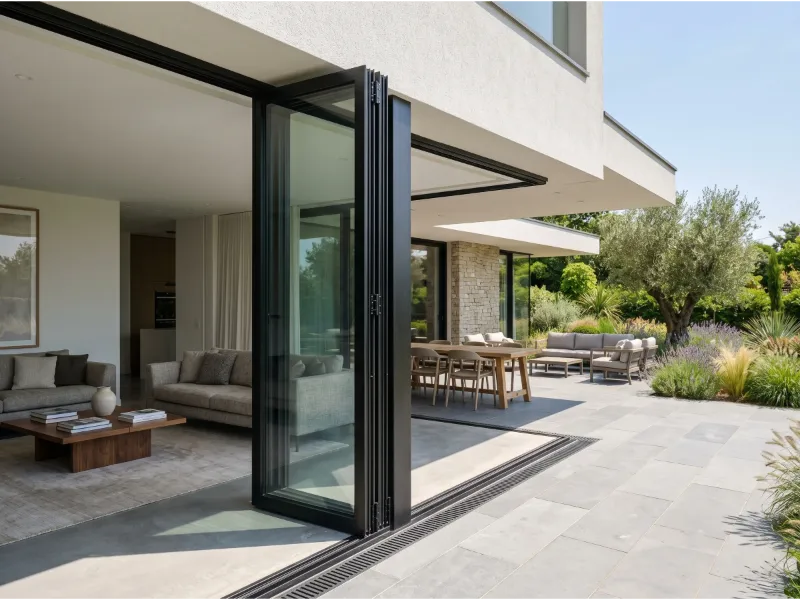
Impact Ductility: Unlike brittle finishes, powder coatings offer enough flexibility to resist cracking upon minor impacts.Premium powder coated aluminum folding glass door with smooth finish, anti-corrosion and salt spray resistant surface treatment, slim frame tempered glass door for residential and commercial interior space.
Material Grades to Specify:
Standard Polyester: 5–8 year color retention; best for sheltered or interior use.
Weather-Resistant Polyester: 10–15 year retention; the recommended baseline for inland windows.
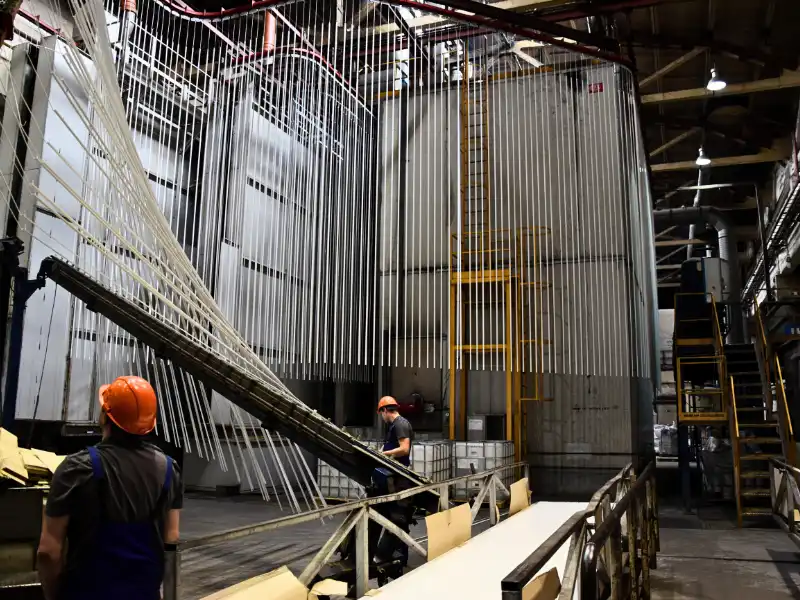
Fluorocarbon Powder: 20+ year retention; a premium alternative to liquid PVDF for high-rise coastal sites.High-quality aluminum profile surface treatment workshop, vertical anodizing and powder coating production line for aluminum windows and doors, suitable for coastal and high-humidity projects with corrosion resistance.
PVDF coatings utilize liquid resins applied in multiple layers (standard 2-coat or premium 3/4-coat systems). The resulting finish is incredibly fine, exhibiting a deep shimmering effect under direct light.
UV and Chemical Stability: The carbon-fluorine bond in PVDF is exceptionally strong, making it impervious to UV degradation.
Maritime Defense: This is the absolute requirement for any project located in salt-spray zones (e.g., Miami, Gold Coast, or Qingdao).
Electrocoating (Total Immersion Coverage)
Through an electrolytic bath, paint particles chemically bond with the aluminum. Unlike traditional spray methods, electrocoating ensures total immersion coverage.
Visual Style: A smooth, rounded luster reminiscent of a high-quality piano lacquer finish.
Geometric Protection: While spraying is limited to line-of-sight surfaces, electrocoating protects internal cavities and complex profiles from trapped moisture.
Cement Resistance: Offers more than triple the alkali resistance of standard powder coating, ideal for installations embedded directly in masonry.
Wood Grain Transfer (Modern Chinese and Natural Styles)
A timber-look pattern is sublimated into a powder-coated base through heat. This provides a natural aesthetic without the structural risks of timber.
Key Advantages: Resistant to rot, termites, and cracking. It requires zero repainting maintenance, making it ideal for Modern Chinese style courtyards and luxury villas.
On-Site Quality Inspection Protocols
Surface Hardness Test: Firmly scratching a hidden area with a fingernail should leave no visible white marks on high-quality coatings.
Internal Cavity Inspection: Check the drainage holes or profile ends. Superior craftsmanship ensures the interior color is consistent with the exterior finish.
Post-Installation Repair vs. Replacement Matrix
Anodizing: Extremely difficult to repair on-site as the oxide layer cannot be replicated. Deep scratches usually necessitate profile replacement.
Powder Coating: Repairable using specialized two-component acrylic polyurethane paints. Note that color matching may vary slightly from factory finishes.
PVDF Coating: The most repairable premium finish. Professional maintenance teams can perform on-site electrostatic re-coating to near-factory standards.
Electrocoating: Difficult to restore on-site. Standard paint can cover visual damage but cannot restore the original chemical bond or corrosion resistance.
Wood Grain: Texture cannot be restored. Scratches must be touched up with solid colors; significant fading typically requires replacement.