2026年8月27日

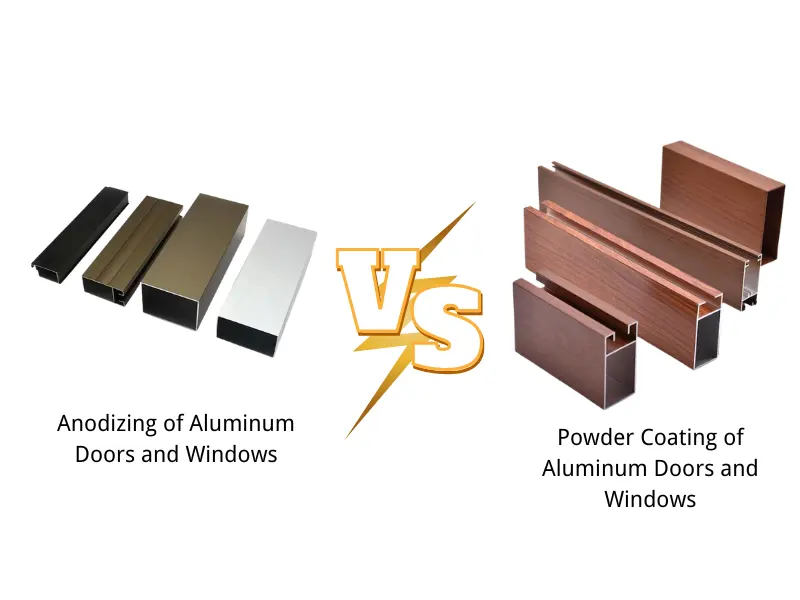
When selecting a surface treatment process for aluminum doors and windows, the key difference between anodizing and powder coating lies in their physical properties and intended applications. This article offers a comprehensive aluminum window finishes durability comparison, highlighting the difference between powder coated and anodized aluminum extrusions to help you make the right choice. Anodizing creates an oxide layer integrated with the aluminum material through an electrochemical reaction, offering an exceptional metallic finish, ceramic-grade hardness, and A-class fire rated aluminum window surface finishes. It is the preferred choice for high-end villas and regions with intense UV exposure (such as Gulf countries like Bahrain and the UAE). In contrast, powder coating forms a polymer protective film known for its unlimited color options, superior impact resistance, and higher cost-effectiveness. It is widely used in large-scale commercial projects and high-humidity environments.
| Feature | Anodizing | Powder Coating |
|---|---|---|
| Core Process | Electrochemical reaction; the oxide layer integrates with the metal substrate. | Electrostatic spraying; forms a protective polymer film on the surface. |
| Aesthetic Texture | Translucent metallic texture; preserves and enhances aluminum grain. | Opaque coverage; available in matte, wrinkled, or wood-grain textures. |
| Color Variety | Limited (Silver, Gold, Champagne, Bronze, Black, etc.). | Infinite (Any RAL color, customizable patterns). |
| Coating Thickness | Very thin (5-25 µm); maintains dimensional precision. | Thick (60-120 µm); effective for masking surface defects. |
| Hardness & Wear | Extremely high (Ceramic-level); superior scratch resistance. | Good; flexible and highly impact/chip resistant. |
| Eco-friendliness | Excellent (No VOCs, easy to recycle). | Good (Solvent-free, powder is recyclable). |
Aluminum door and window frames that prioritize a metallic finish: The anodized coating is transparent; it does not obscure the aluminum’s inherent textures—such as brushed or sandblasted finishes—but rather enhances them, revealing a sophisticated luster that seems to emanate from within the metal.
Aluminum doors and windows require resistance to friction and impact: The aluminum oxide (Al₂O₃) film formed by anodizing aluminum profiles is extremely hard, second only to diamond, making it ideal for scratch resistant anodized aluminum profiles for high-traffic areas where frequent contact is unavoidable.
Precise thickness control is required: The anodized film thickness typically ranges from 5 to 25 μm and “grows inward,” so it does not significantly alter the dimensions of the components.
High fire resistance is required: The anodized coating is an inorganic ceramic material that is completely non-combustible, achieving a Class A fire rating. It does not burn or release toxic or harmful gases at high temperatures, making it one of the few truly A-class fire rated aluminum window surface finishes. In contrast, powder-coated paint films are organic materials that melt and burn at high temperatures, releasing toxic fumes. Their highest fire rating is Class B, which fails to meet high-level fire safety requirements.
Quick customization for small projects: Customization for single-family private villas or small-batch high-end projects that require custom metallic finishes such as champagne, antique bronze, titanium gold, or matte black. With small production volumes, clients benefit from customized aluminum extrusions for high-end residential projects and enjoy a fast lead time for anodized aluminum window profiles without bearing the high color-matching fees and minimum order quantity costs associated with powder coating.
Requirement for non-conductive aluminum doors and windows: The anodized coating renders the aluminum surface non-conductive.
Disadvantages: Limited color options, average outdoor weather resistance, poor resistance to acids and alkalis, prone to white spot corrosion in salt spray environments, and cement stains on window and door frames during construction can leave marks. Additionally, it requires higher-quality aluminum profiles, resulting in a higher price compared to powder coating.
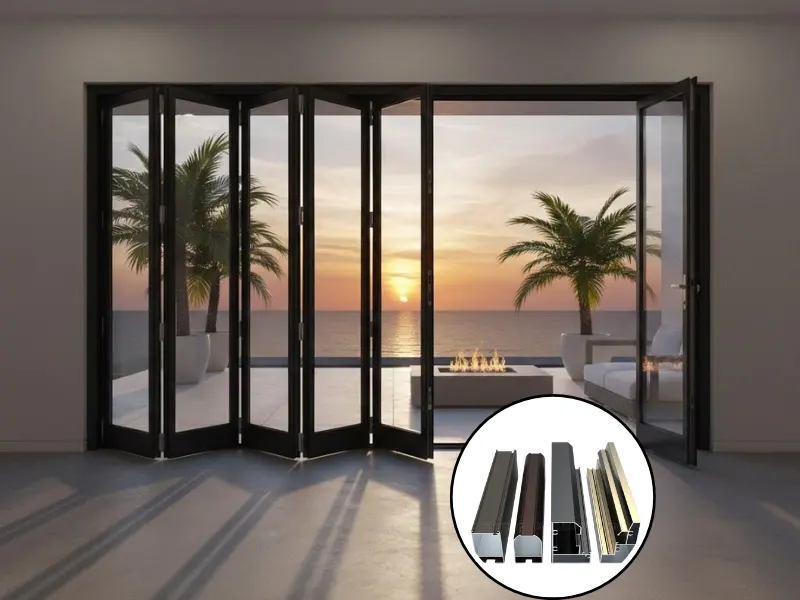
Based on our past projects, the following cities are suitable for anodizing as a surface treatment, often representing the best aluminum finish for Middle East extreme heat:
Diverse color requirements: Anodizing is limited to a specific range of metallic colors, whereas powder Coating offers virtually unlimited color options: it can be customized to any solid color from the Pantone chart, high-saturation colors, and gradients, as well as wood grain, stone grain, skin-like matte, frosted textures, metallic glitter, velvety finishes, and even replicate the tactile sensations of stone, wood, and leather. This enables effects like custom RAL color powder coated aluminum folding doors that perfectly complement any design style—something anodizing can never achieve.
For large-volume, standardized projects: Most high-volume projects prioritize color consistency, lead times, and cost. With powder coating, as long as the powder color code and spraying parameters remain consistent, color variation across an entire batch can be virtually eliminated. Additionally, lead times are significantly shorter than those for anodizing, and costs are substantially reduced, often meeting Qualicoat Class 2 powder coating for architectural aluminum standards.
Aluminum profiles requiring surface imperfections to be concealed: The thicker coating effectively masks minor mold marks or surface imperfections left during the aluminum extrusion process.
Impact Resistance and Toughness: Powder coatings are elastic; when struck by stones or subjected to mechanical pressure, they deform rather than shatter like ceramic coatings, making them ideal for outdoor furniture and railings.
Projects Involving Other Metal Components: Powder coating allows other metals to be colored just like aluminum profiles. If your project includes steel, aluminum, and stainless steel components, powder coating ensures that all parts have perfectly consistent colors.
Outdoor Applications: When evaluating anodizing vs powder coating for coastal aluminum windows, this is where powder coating holds a clear advantage. Anodized coatings are prone to corrosion, white spots, and loss of gloss in salt spray or acidic/alkaline environments. Powder coating, however, can effectively withstand these conditions through the selection of resin formulations. PVDF fluorocarbon powders with a fluorine content of ≥70% can even withstand outdoor exposure for over 20 years.
Impact Resistance: Anodized surfaces have extremely high hardness but are highly brittle. When subjected to sharp impacts from hard objects, they may fracture locally, resulting in irreparable chipping damage. Powder coatings, while not as hard, offer superior flexibility and impact resistance. The polymer coating absorbs impact energy through elastic deformation, making it less prone to shattering upon impact, and scratches can be repaired by repainting.
Typical Applications: Bottom frames of apartment doors (subject to handling and bumps), corners of balcony sliding doors (impact from ladders or heavy objects), and main entrances in high-traffic commercial spaces—in these areas frequently exposed to hard impacts, the toughness of powder coating proves more advantageous.
Disadvantages: It masks the inherent metallic texture of aluminum door and window frames; lacks sufficient hardness (the powder surface can be damaged even by fingernails); excessive powder thickness can interfere with precision assembly; and it is not heat-resistant (it melts at 80°C).
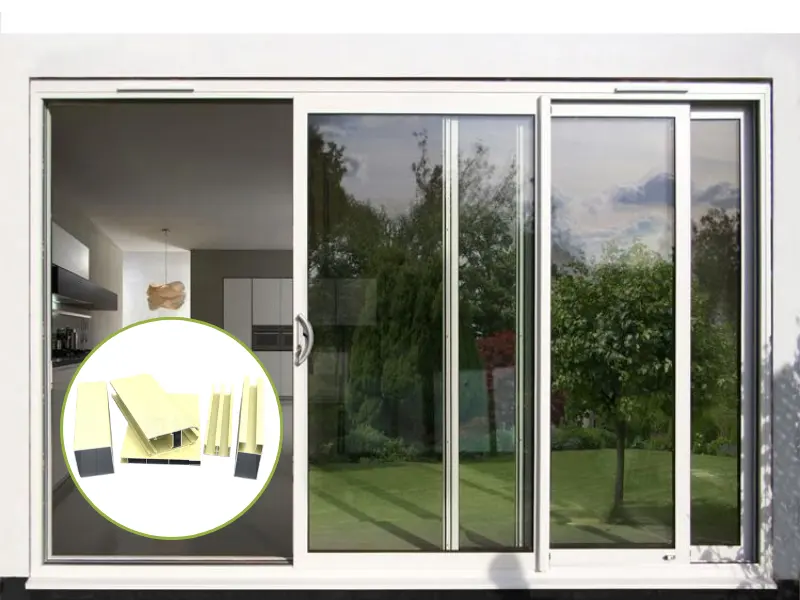
Based on our past projects, the following cities are suitable for powder coating as a surface treatment:
When comparing anodizing vs powder coating cost per square meter, powder coating for standard aluminum window and door profiles typically has a lower initial cost, but anodizing can offer a better unit price under specific conditions (such as high-volume production and standard colors), and its long-term durability may reduce costs over time. For those seeking wholesale aluminum profile surface treatment from China, powder coating generally presents a more cost-effective and scalable solution with faster turnaround.