2026年8月27日

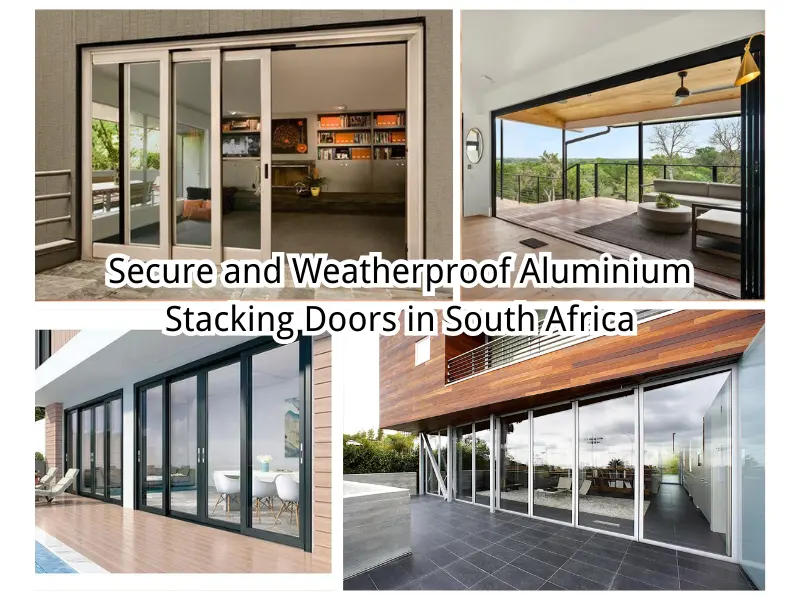
Given South Africa’s specific weather conditions and social environment, selecting aluminium doors requires careful consideration. The following guide explains how to choose Aluminium Stacking Doors that offer both robust security and effective weather resistance.
Doors serve a role far beyond merely acting as a bridge between the indoors and outdoors; they function as the primary line of defense for your home against both the elements and security threats.
With the recent and continuous rise in fuel prices in South Africa (such as the widely discussed petrol price forecasts for June 2026), coupled with ongoing debates regarding compliance and potential fines for solar panel installations (i.e., “South Africa solar panel fines”), energy-related anxiety among South African households has intensified. “Passive energy saving”—strategies that reduce energy consumption through structural design—has emerged as a new necessity in home renovation. Secure and weatherproof stacking doors not only withstand external storms and gale-force winds, but their superior thermal insulation and sealing properties also effectively block out extreme summer heat and biting winter winds. This significantly reduces reliance on air conditioning, allowing your home’s solar battery storage system to last longer during power outages (known as “Loadshedding”) and, in the long run, saving you a substantial amount on living costs.
A recent series of high-profile news stories in South Africa—ranging from public debates regarding policing under Minister Bheki Cele to cases involving asset freezes by the SIU—reflects the public’s persistent concern regarding the general security environment. Against this social backdrop, taking personal control of your home’s security has become more critical than ever.
Doors that lack adequate anti-theft features pose the following critical risks: Thieves’ Preferred Point of Entry: Cheap sliding or folding doors are often easily defeated; they can be pried directly off their bottom tracks using a crowbar (i.e., “lifted off the tracks”) or easily bent out of shape due to thin, flimsy aluminium profiles. A large expanse of glass door lacking adequate physical protection effectively serves as an open invitation for intruders. The Absolute Peace of Mind Provided by a Heavy-Duty System: Choosing stacking doors that prioritize security means benefiting from features such as thickened, high-strength aluminum alloy profiles (typically 2.0mm or thicker), anti-lift track designs, and multi-point locking systems. In regions facing significant security challenges, this robust construction offers exceptional resistance against external forced entry and violent damage, thereby safeguarding the lives and property of your family within the home.
Aluminium Stacking Doors represent a high-end, panoramic door and window system within the international architectural sector that seamlessly blends “sliding” and “swinging/turning” functionalities. They serve as an upgraded version of standard sliding doors—bearing some resemblance to bi-fold doors—yet possess superior structural strength compared to traditional folding systems, making them ideally suited for South Africa’s environment, which is characterized by strong coastal winds. In layman’s terms, you can think of them as “sliding doors that turn corners and tuck neatly against the wall.” They feature the following characteristics:
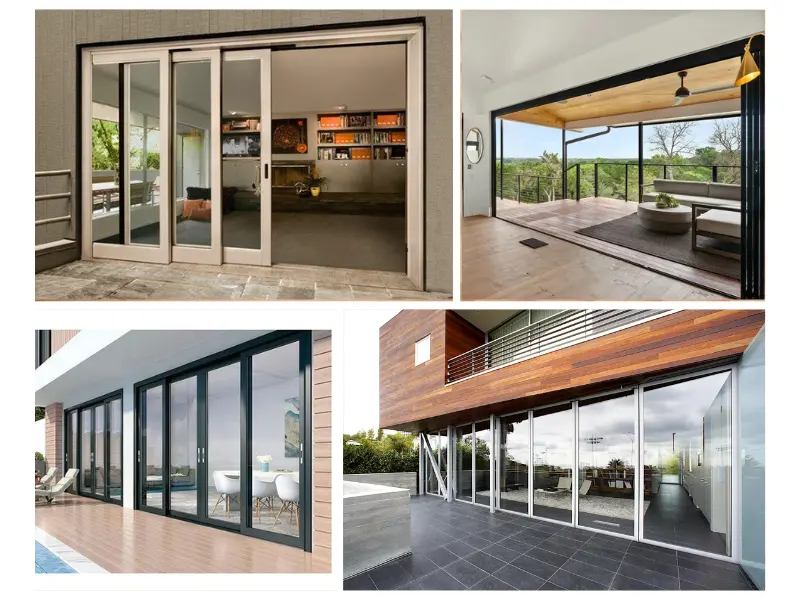
Unlike traditional “bi-fold doors“—which are rigidly connected by hinges—each glass panel in a stacking door system operates completely independently. They slide along a single main track without being mechanically tethered to one another. This allows users the utmost flexibility to slide open one, two, or all of the panels at will, precisely tailoring ventilation levels to the day’s specific needs.
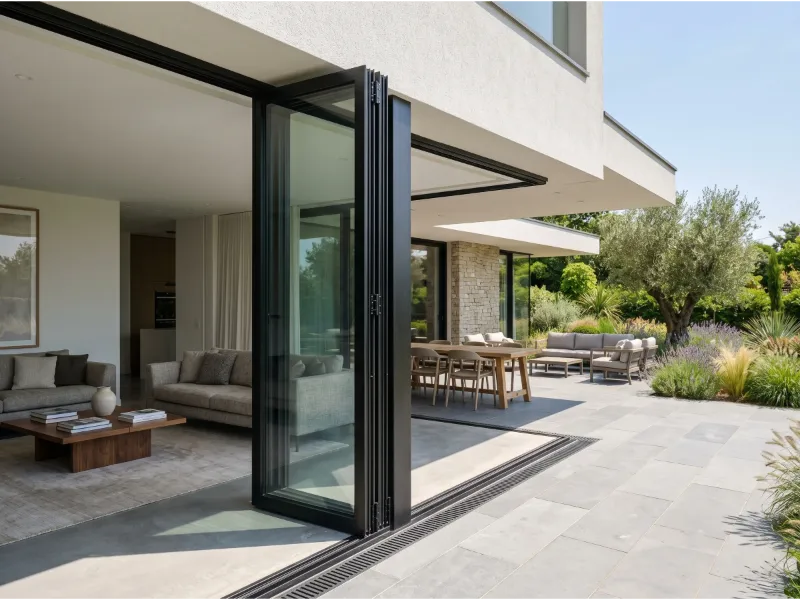
When the door panels reach the end of the track, they disengage from the main sliding rail and pivot 90 degrees—much like turning the pages of a book—to “stack” neatly and flush against the adjacent wall. Whereas traditional sliding doors always leave half of the glass surface obstructing the opening (limiting access to 50%), stacking doors can effectively make the entire wall “disappear,” achieving a seamless, unhindered fusion between indoor and outdoor spaces.
Because the panels do not require the installation of heavy-duty load-bearing hinges between them, stacking doors can effortlessly accommodate “ultra-narrow frame” or even “frameless” designs. This aesthetic makes them particularly well-suited for the high-end villas and luxury resort hotels currently trending across South Africa.
Operating Principle: The system utilizes an interlocking linkage mechanism. When you pull the leading door panel, once it slides to a specific position, an interlocking mechanism within the frame “catches” and engages the next panel. This process continues sequentially until the door is fully opened, at which point all the movable panels are neatly “stacked” behind the fixed panel located at the very end.
| Door/Window Type | Operation Method | Open Space Ratio | Visual Obstruction | Core Application Scenarios |
|---|---|---|---|---|
| Stacking Doors | Individual panels slide independently, then pivot 90 degrees to fold flat against the wall at the end. | Approx. 90% | Extremely Low (Minimalist frameless / Narrow-frame designs) | Modern high-end villas, seaside restaurants, and luxury residences requiring unobstructed panoramic views (e.g., Camps Bay in Cape Town, Sandton in Johannesburg). |
| Sliding Doors | Slide horizontally along parallel tracks. | 50% – 66% | Moderate (Involves overlapping vertical stiles) | Standard residential homes prioritizing cost-effectiveness; balcony partitions. |
| Bi-fold Doors (Traditional Folding Doors) | Connected via hinges; fold in a linked, accordion-like (Z-shaped) motion. | Approx. 90% | Relatively High (Involves numerous robust hinges) | Courtyards with ample space; settings where a traditional, linked-folding aesthetic is desired. |
| French Doors | Pivot inward or outward on side-mounted hinges. | 100% (Typically used for smaller total spans) | Low | Traditional backyard entryways; narrow passageways connecting bedrooms to balconies. |
The premier city in South Africa for promoting aluminum stacking doors is Cape Town, followed by Johannesburg and Durban.
Cape Town: This region boasts the highest concentration of luxury residences, seaside villas, and resort-style restaurants in South Africa. Locals place an immense value on unobstructed, panoramic views of the mountains and sea, as well as a lifestyle that fosters seamless “indoor-outdoor flow.” The coastal salt spray and strong winds prevalent in this area impose extremely rigorous demands on the quality of doors and windows; consequently, high-end buyers are fully prepared to invest in “corrosion-resistant hardware” and “ultra-weather-resistant surface finishes.”
Johannesburg: As a major economic hub, Johannesburg is home to a vast number of upscale gated communities (Estates). Blessed with abundant sunshine and a hot, dry climate year-round, the city embraces a vibrant “Braai” (barbecue) culture in its backyards. Coupled with stringent requirements for security and theft prevention, stacking doors—equipped with advanced high-security locking systems—see exceptionally high sales volumes in this region.
Durban: As a dynamic coastal resort city, both residential and commercial projects here show a strong preference for stacking doors that allow for the complete opening of spaces, effectively catering to the local maritime climate characterized by consistently high humidity and salinity.
In South Africa, a high-quality aluminum stacking door must do more than simply seamlessly merge indoor and outdoor spaces while standing up to wind and rain; it must also align with local living requirements, serving as a reliable barrier for household security.
The strength of the door frame serves as the primary line of defense against both wind and intrusion. Our entire product range utilizes high-purity, virgin 6063-T5/T6 aluminum profiles—never recycled scrap aluminum—to guarantee exceptional material toughness and structural integrity (with load-bearing walls reaching a thickness of 2.0mm). This ensures stable resistance against daily external impacts and the fierce coastal winds.
In areas with exceptionally high security demands—such as Northern Johannesburg, the estates of Pretoria, and the coastal villa districts of Cape Town—hardware components determine not only the smoothness of operation but also serve as a critical factor in personal safety.
Our standard configuration features a Multi-point Locking System combined with top and bottom Shootbolt locks. This mechanism creates a rigid, interlocking bond between the door panels and the frame, rendering them impervious to prying tools. Furthermore, to support heavy-duty security glass, our bottom rollers are fitted with precision bearings featuring a combination of stainless steel and wear-resistant nylon; capable of supporting a load of 100–150kg per panel, these rollers allow even heavy-duty security doors to be opened and closed silently with just one hand.
Security and Safety: Tailored specifically to the South African environment, we prioritize and recommend PVB Laminated Safety Glass as our standard feature. In the event of an impact, glass shards adhere to the interlayer film rather than shattering and falling; this not only prevents accidental cuts but also significantly delays—and deters—forced entry attempts by intruders.
Thermal Insulation and Weather Resistance: By integrating thermal-break technology with automotive-grade EPDM sealing strips, our systems effectively block South Africa’s harsh UV radiation and coastal torrential rains, thereby enhancing the home’s passive energy efficiency rating.
We have implemented exclusive optimizations based on local South African living habits to ensure a superior level of compatibility and functionality:
Seamless Compatibility with Security Grilles: We provide ample track space for installation, ensuring perfect compatibility with South Africa’s leading brands of sliding security grilles—such as Trellidor and ClearVu. This design allows for the addition of security barriers without compromising the overall aesthetic appeal of the home’s interior and exterior.
A Tribute to “Braai” Culture: In celebration of the outdoor barbecue culture cherished by South Africans, we offer a “Flush Track” (level-threshold) design. This feature creates a seamless transition between the living room and the patio, completely eliminating tripping hazards for the elderly and children while ensuring effortless daily movement throughout the home.